When I was growing up, as part of The Rocky and Bullwinkle Show, another cartoon was embedded within titled The Mr. Peabody & Sherman Show. That show featured a time-traveling device called the ‘Wayback Machine.’ Since my presidential blog series is getting closer to the present, and recent events are not long ago, please place yourself in your own mental ‘Wayback Machine’ to 2007 to appreciate this interpretation.
On a bitterly cold day in Springfield, Illinois in February 2007, the Illinoisan wanted to channel his inner Abe announcing his campaign in front of the Old State Capitol where Lincoln served. As much excitement as the first term US senator had garnered, remember Senator (and former First Lady) Hillary Rodham Clinton of New York.
Senator Obama gained recognition for his blistering keynote address at the 2004 Democratic National Convention. I have read that he didn’t particularly enjoy the slow-moving Senate and was approached by several prominent Democrats to challenge Clinton in 2008. After much deliberation, he threw his hat in the ring on a frigid winter day.
An intellectual constitutional lawyer initially lacked the skill set to campaign effectively. After watching Vice President Kamala Harris’s performance at her CNN Town Hall in late October, pundits reminded viewers that she only had been a presidential candidate for ninety days and how bad Obama was in 2007.
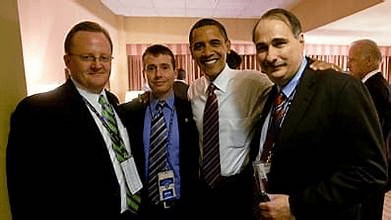
Barack Obama became a better candidate and eventually POTUS. I have been studying (for a future project) the strategic decisions campaigns made. Obama’s exemplary campaign team that election (David Plouffe- Campaign Manager, David Axelrod- Chief Strategist, Robert Gibbs- Communications Director) looked at several paths to the 2,117 delegates needed to secure the nomination. Caucuses.
Most states have presidential primaries, but about a dozen states still allocate delegates from caucuses. Naturally, you want to try to win in the big delegate-rich states, but Obama’s campaign decided to place a special emphasis on the caucus states. Additionally, they didn’t need the allocation of resources the primary states dud, Washington Post writers Dan Baez and Haynes Johnson chronicled this in their book The Battle for America: The Story of an Extraordinary Election.
The Obama campaign sent the candidate to Boise, Idaho for a campaign event attended by 14,000 people. Only eighteen delegates were at stake, but his appearance and their organizing saw him win fifteen of them. With well over four thousand delegates at stake that may be a waste of time but netting a dozen delegates was incredibly important in the closest contest since Gerald Ford and Ronald Reagan for the 1976 Republican nomination.
Obama won ALL thirteen caucuses shutting out Senator Clinton, securing 325 delegates to her 177. Obama ended up with 2272.5 delegates to Clinton’s 1,978, a plurality of just 294.5. The 148 delegates he netted from the caucuses made a massive mathematical difference.
The popular vote for the 2008 Democratic nomination was
Barack Obama: 17,535,458
Hillary Clinton: 17,493,836
Difference: 41,622
Out of 35 million votes, that vote was only 0.1% apart, yet all that matters is delegates, not votes. In the general election, all that matters are the 538 electoral votes, not the popular votes as she would learn in 2016 against Donald Trump.
Little things matter…
 caryheinz.com
Leave a comment