Ah, Richard Milhous Nixon. The man who appeared on every presidential ballot from 1952-1972 except 1964. A complex man who was at the center of American politics for much of the Cold War era. Congressman, Senator, Vice-President, and the only President of the United States to resign. Why?
Richard Nixon was born in 1913 in Yorba Linda, California, a future suburb of Los Angeles. His early life was tough, his family struggled financially, and he had a childhood that could be called hardscrabble. A family business took much of his youth away helping out but established a formidable work ethic and drive. Obstacles were always in his path ahead in life, and he put his head down and worked very hard to get ahead.
He was on sports teams but lacked athleticism and didn’t see much playing time. Nixon was a skilled debater, something that would benefit him later politically. He earned a scholarship to Harvard, but due to his family’s poverty and his brothers’ poor health, he could not attend. After attending Duke law school, he failed to be hired by the FBI or elite East Coast law firms.
His love life was also a struggle; engaged in 1933, but that relationship ended before marriage. Nixon asked his eventual wife Pat out repeatedly before she relented, and she rejected several proposals of marriage before saying yes. He served in World War II in his early thirties, where his poker skills fleeced as much as $8,000 out of other servicemen (Over $100,000 today).
A bit of luck helped him in his early political career. Local businessmen recruited him, and he had the help of a skilled political operative named Murray Chotiner. After two terms in the House of Representatives, he advanced to the Senate, and at just thirty-nine years old he was the second youngest vice president in American history. Then his luck ran out.
Critics discovered the existence of a special political fund set up for Nixon. Eisenhower, a military hero but political novice, let Nixon flail in the wind deciding whether to keep him on the 1952 ballot. Nixon went on television and delivered the famous Checkers speech (named for a Cocker Spaniel he accepted as a gift for his children), which both saved and shaped his political career.
Eisenhower and Nixon had a complex relationship. They were almost a quarter century apart in age and from different backgrounds. In 1952, Ike considered dropping him as his running mate to gain more political experience from running a cabinet department. Nixon, a heartbeat from a man who had a serious heart attack in 1955. When Nixon finally sought the president in his own right, Eisenhower’s support wavered. When asked for an example of a contribution of Nixon to his presidency, he responded “if you give me a week, I may think of one.” Ouch.
Richard Nixon also had the misfortune of having his chief rivals in the Democratic and Republican parties from two of America’s wealthiest families. Republican Nelson Rockefeller nearly challenged Nixon in 1960 (and 1968) with an immense family fortune. Nixon’s 1960 opponent in the general election, John F. Kennedy, was from another very prosperous family.
Kennedy edged out Nixon by 0.17%, about 110,000 popular votes. He returned to California and tested incumbent Governor Edmund “Pat” Brown (Jerry Brown’s father) and lost. He quipped “You won’t have Nixon to kick around anymore, because gentlemen, this is my last press conference.” He relocated to New York City, joined a successful law firm and for the first time in his life made money.
The political comeback of Richard Nixon is astonishing. As always, he tirelessly campaigned for GOP congressional candidates in 1966 and accumulated favors for 1968. The ‘new Nixon’ emerged with a new image skillfully using television leading him to be the Republican nominee once more in 1968. After holding a huge lead in September, he barely prevailed over Democrat Hubert Humphrey by 0.7%, about a half million votes. On January 20, 1969, Richard Nixon was sworn in as the thirty-seven President of the United States.
You lose barely, then you win…barely. It would not be inaccurate to say that Nixon was an insecure loner. His favorite companion was his yellow legal pads, where he recorded his thoughts. Many books have been written about the 1972 campaign, but Nixon chose a “take no prisoners” strategy for his reelection, somewhat understandably. Edward “Ted” Kennedy was the surviving male member of his family who many thought was a frontrunner for the Democratic nomination.
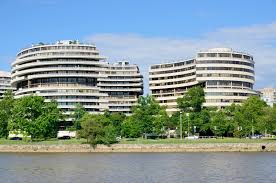
What followed was a series of decisions and actions that would ultimately be placed under a historical umbrella called “Watergate.” The term comes from a complex of buildings where the Democratic National Headquarters had their office. On June 17, 1972, the office of DNC head (and future NBA commissioner) Larry O’Brien’s office was burglarized. There were many more illegal and illicit actions that did not receive as much attention. Sixty-nine indictments, forty-eight convictions, and forty prison sentences came out of the cumulative activities taken for the reelection. Once again, why?
Richard Nixon fought and clawed his way to the White House. Others had easier paths. Was he paranoid? Probably. Did his ambition to be rehired by the American people cloud his judgment? Undoubtedly. Was it right? Of course not. Is it understandable? I think so.
My apologies, this went a bit long.
 caryheinz.com
Leave a comment