About forty years ago, one of my professors at Indiana University at South Bend, who was either in history or political science (the ones I paid attention to), introduced me to presidential greatness polls. Historian Arthur Schlesinger Sr. wrote an article in Life Magazine in 1948. I found it fascinating and still do.
In nearly every poll since Abraham Lincoln ranks first. He should. Washington is almost always in the top three for he played a pivotal role in the creation of the United States. Lincoln is first because he saved the United States, freed the slaves, and did several other important things such as the transcontinental railroad, land grant colleges, and more.
Lincoln was elected in 1860 in a fractious election with four candidates as the country was splitting. His predecessor, James Buchanan, did very little, and once Abe raised his right hand to take the Oath of the Office, he inherited a mess. Southern states seceded, Lincoln was able to barely hang onto the border states of Delaware, Kentucky, Maryland, and Missouri.
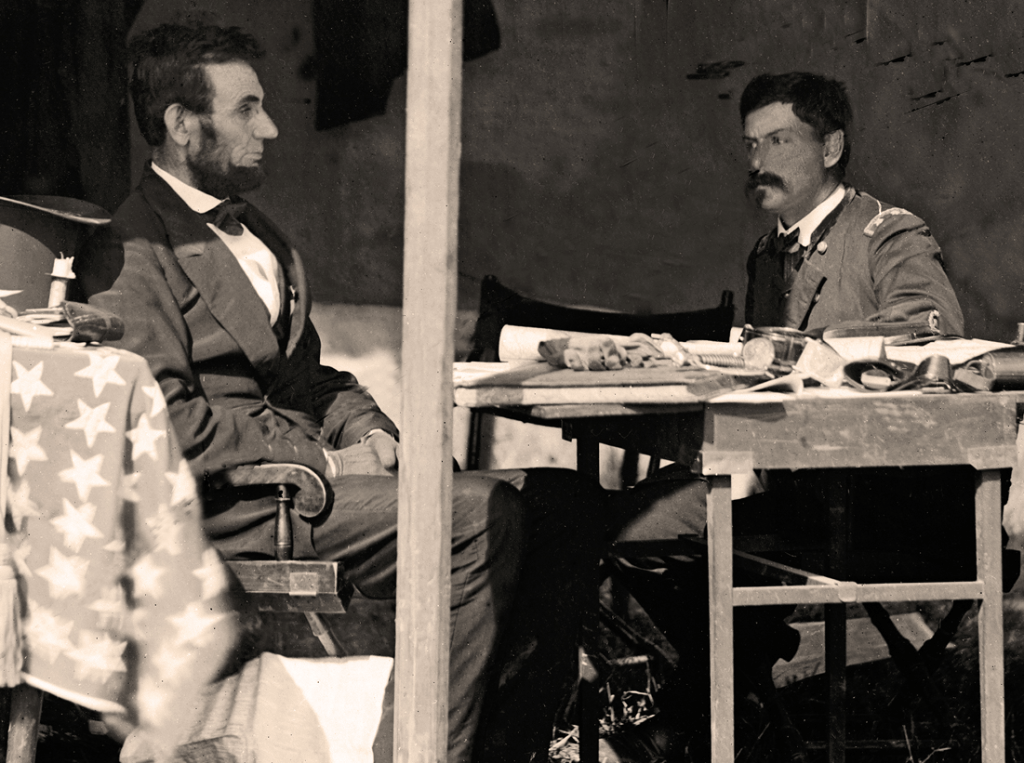
The Union had the advantages of men and materials, the Confederacy had better generals. When the war began, Winfield Scott was America’s top military man and had served since Thomas Jefferson. His replacement George McClellan was a pompous, egotistical failure who was afraid to fight. Lincoln once asked the inattentive general “If General McClellan does not want to use the army, I would like to borrow it for a time.” He may have prolonged the war, causing increased casualties on both sides. It took Lincoln almost four years to find a winning general, Ulysses S. Grant.
You may find it hard to believe today that our most beloved POTUS was not a shoo-in to be reelected in 1864. The war was not going well, and in July of that year, Confederate troops advanced within five miles of Washington DC. The country was tired of the war and saw no end in sight.
If you have seen Steven Spielberg’s 2012 masterpiece Lincoln, Daniel Day-Lewis remarkably becomes the man himself and shows off his astute political mind. Things were not going that well in mid-summer 1864, and Republican rainmaker of New York, Thurlow Weed, even advised that “his reelection was an impossibility.
That may have contributed to his ‘Blind Memorandum’ of August 23, 1864. He wrote:
“This morning, as for some days past, it seems exceedingly probable that this Administration will not be re-elected. Then it will be my duty to so co-operate with the President elect, as to save the Union between the election and the inauguration; as he will have secured his election on such ground that he can not {sic} possibly save it afterwards.” -A. Lincoln
He sealed the document in an envelope and had his entire cabinet sign the outside of it. In the midst of the Civil War, Lincoln unselfishly pledged to accept the results of the election and work with his successor.
For Abe’s and America’s sake, that envelope became a lucky talisman. Within a week General Sherman took Atlanta and began his ‘March to the Sea.’ Other battlefield successes and Lincoln was able to beat McClellan, his Democratic opponent. The president outpolled the general 116,887 – 33,748.
“What If?” History is both fun and frightening. I am afraid had Lincoln lost to that man, he would have sued for peace with the South, and the map of what is the United States might look more like South America.
Thanks Abe!
 caryheinz.com
Leave a comment